
A GRAMMAR FOR HUMAN SYSTEMS
Typology asks who you are. Latent Organization asks how human activity is organized.
It separates Purpose from Use, Procedure from Process, and result from standard. Across sixteen type-positions, LO gives those differences stable places.
LATENT ORGANIZATION DOES NOT END INQUIRY.
IT GIVES INQUIRY SOMEWHERE TO STAND.
What the Book Shows
Latent Organization begins with distinctions we already recognize, then gives those distinctions stable positions and relations.
Separate the Parts
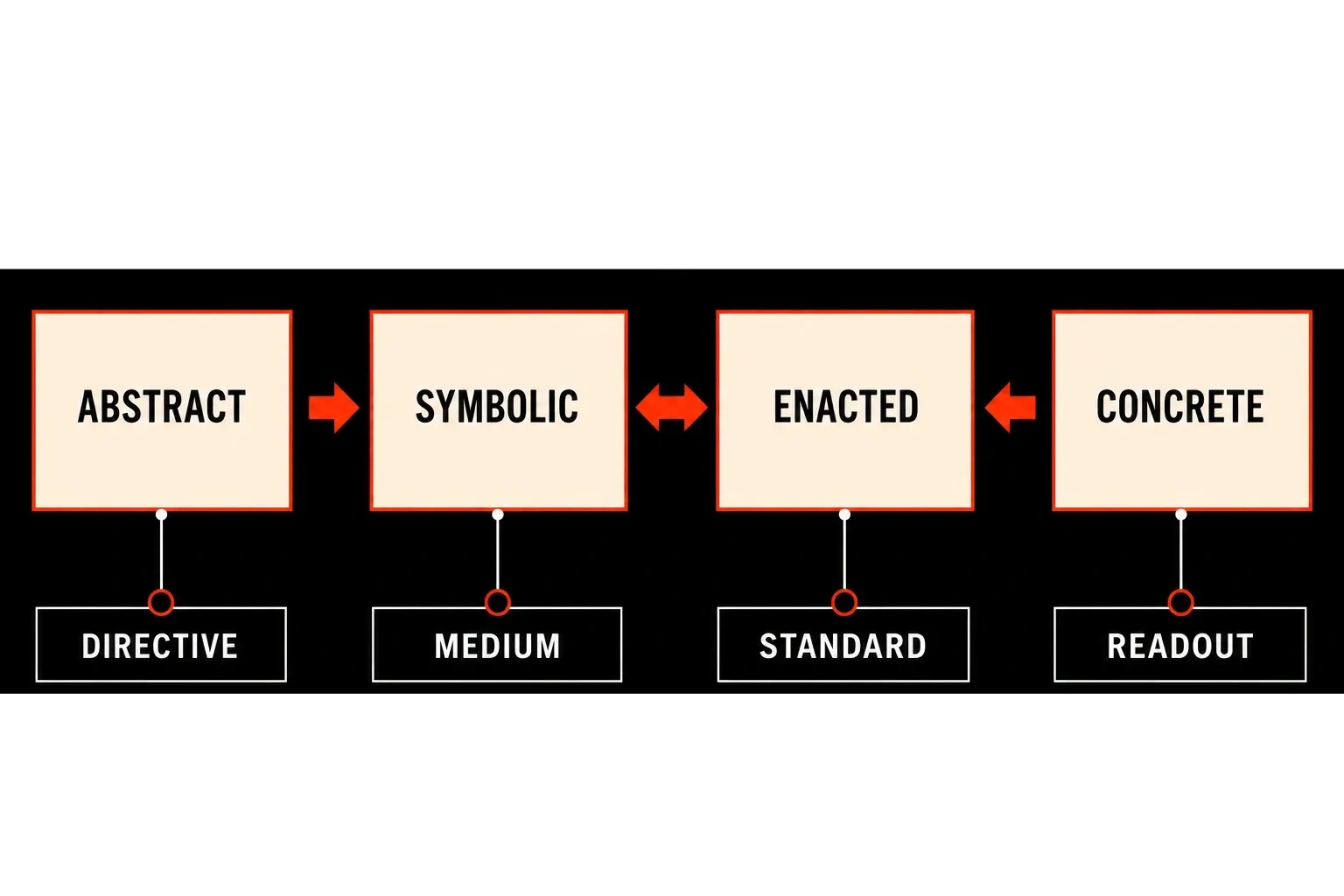
LO distinguishes four registers: Abstract, Symbolic, Enacted, and Concrete. In ASEC reading they ask what is brought into Effect, through which organization, what counts as closure, and what first shows.
Sixteen Positions
Each of the sixteen type-positions carries one canonical token in each token family: Abstract Directive, Symbolic Media, Enacted Standard, and Concrete Readout.
Relations Between Positions
D/S Codes compare and transform formal type addresses. The book separates what the geometry entails from what must be declared or tested.

One Position in Practice
A chair can enter Use in its assigned Function while the question of Purpose remains open.
What LO Can Claim
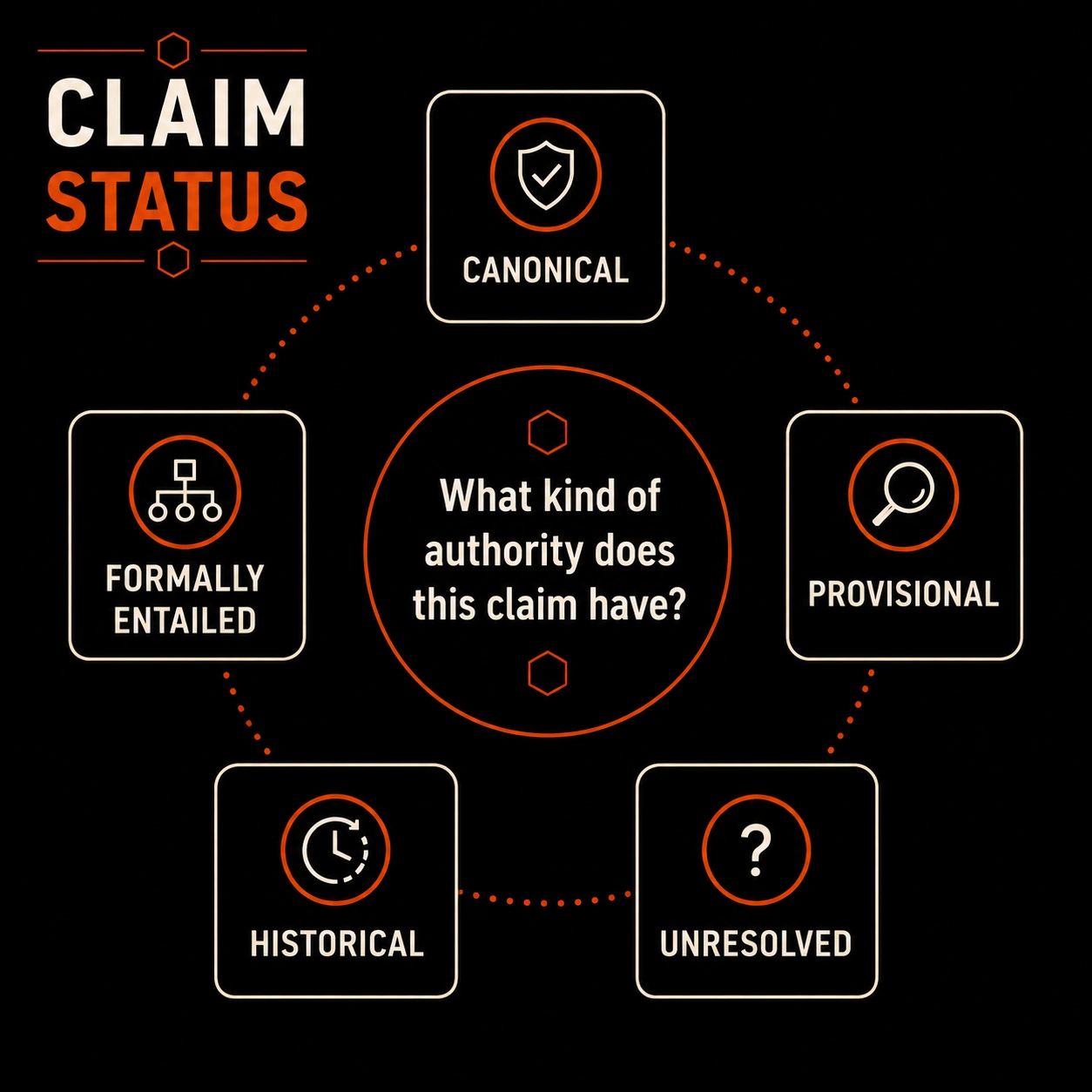
LO keeps different kinds of authority separate so each claim carries only the weight it has earned.
Canonical
Belongs to the current declared contract of LO.
Formally Entailed
Follows within the declared formal system from stated premises.
Provisional
An admissible interpretation or research claim whose status remains visible.

Historical
Records an earlier architecture or superseded usage.
Unresolved
A preserved variable or term whose expansion or semantic rule remains open.